Are anonymous message apps safe? They can be, but it depends almost entirely on the app. A safe one filters mean messages before you see them, lets you block, report and limit who can message you, never sells clues about who sent a message, and never fakes messages from "friends." Some popular apps have fallen short on exactly these points, and US regulators have taken action. This guide explains the real risks and gives you a checklist for any app you or your teen is considering.
We make MirrorBox, an anonymous messages app for 13+, so we've thought about this a lot. We'll use it as an example, but the checklist works for any app.
How anonymous message apps work#
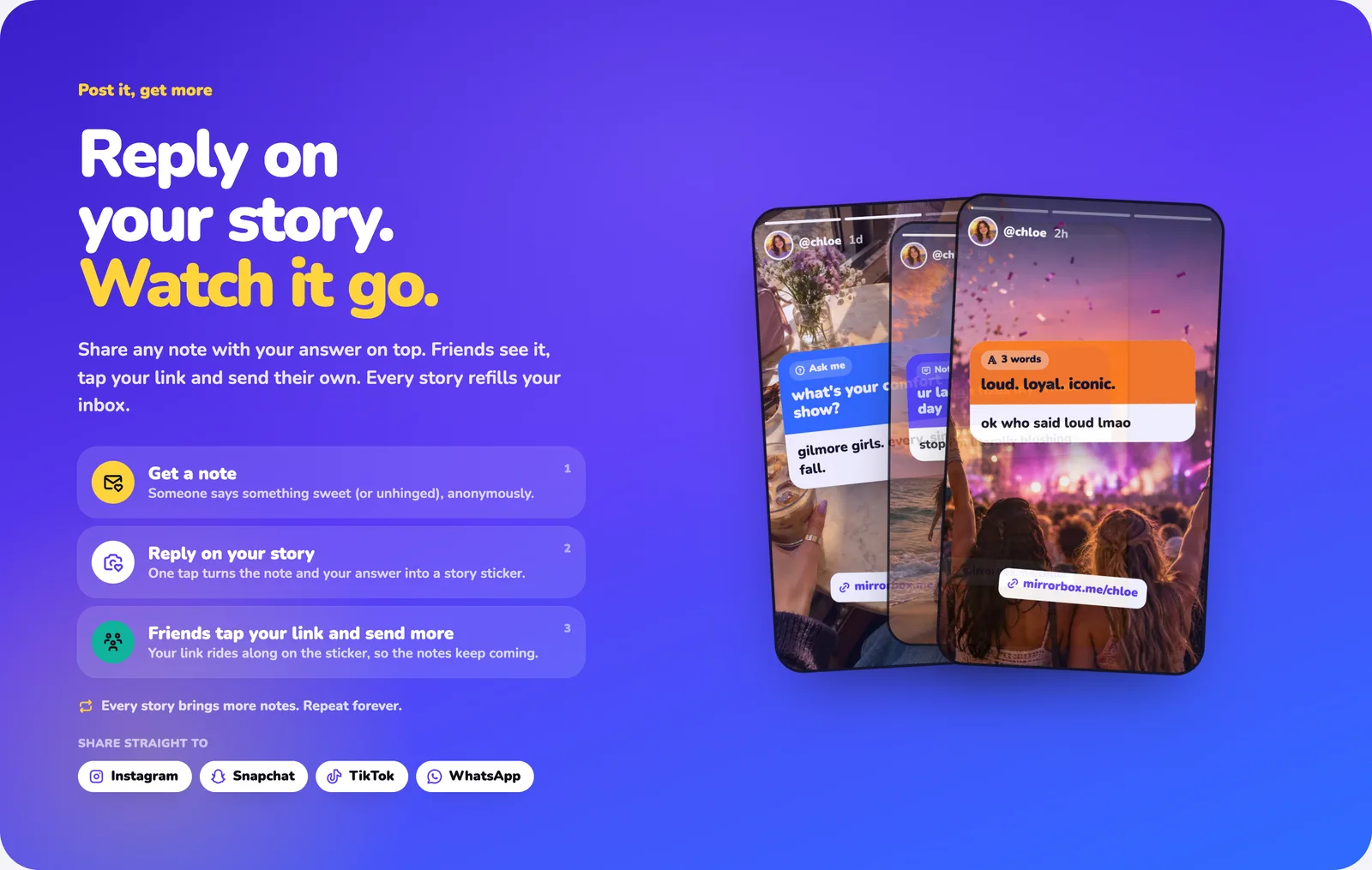
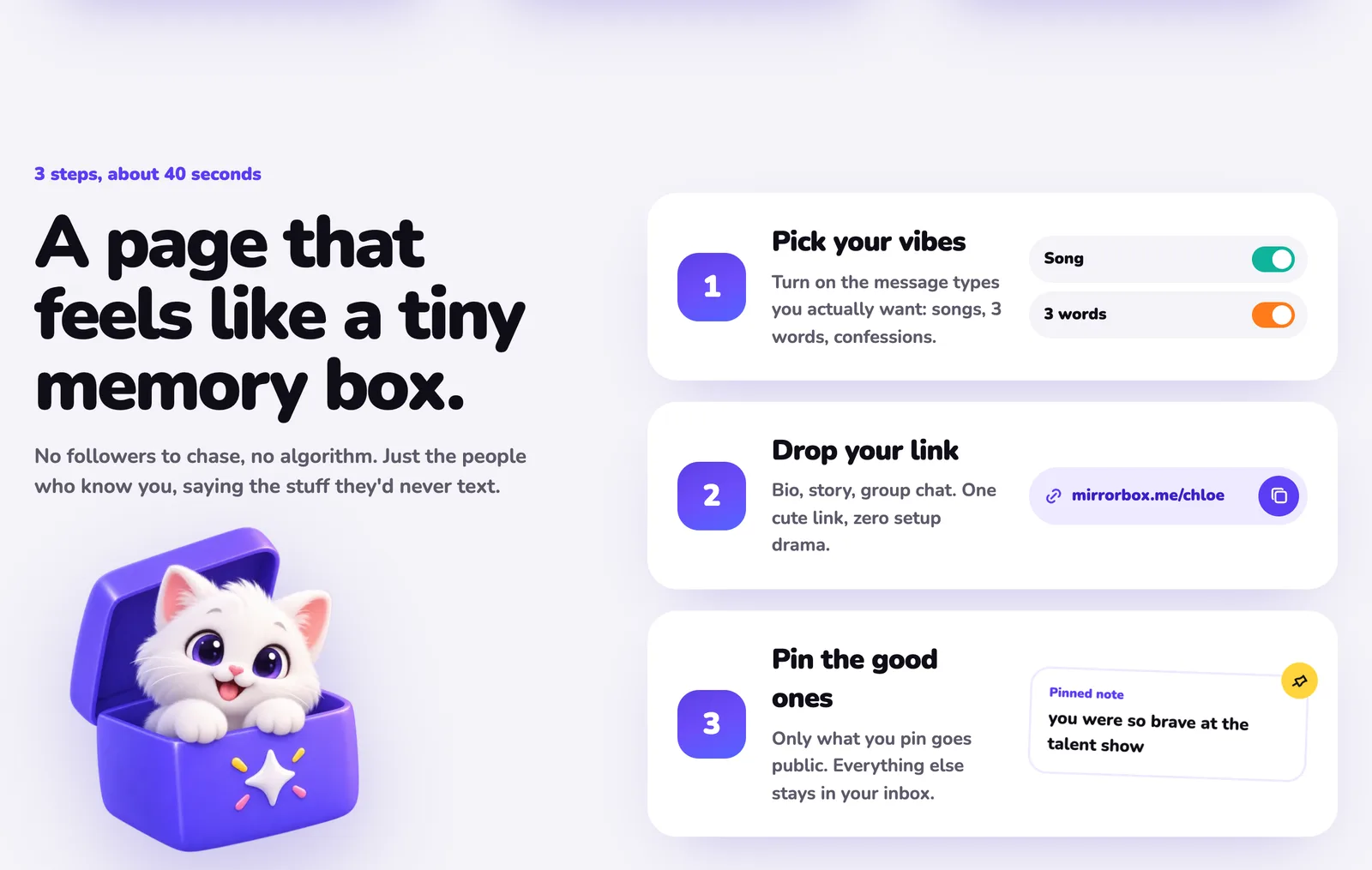
You get a personal link, like mirrorbox.me/yourname, and post it on your Instagram or Snapchat story. Friends tap it and send a message without their name attached. You read the messages in a private inbox and can choose to answer some publicly, usually by sharing them back to your story.
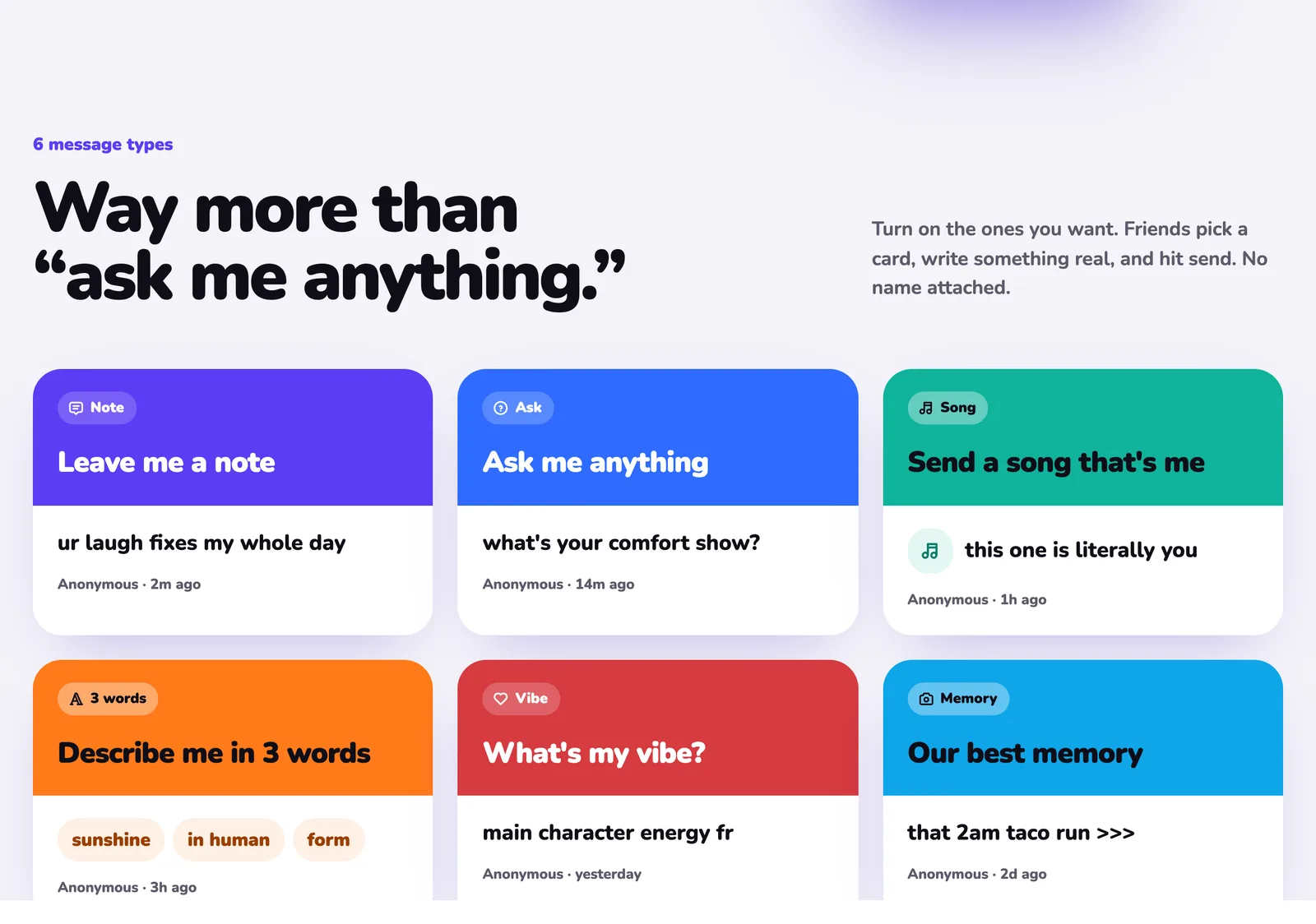
At their best, they're a way to hear the nice things people don't say out loud: "ur laugh fixes my whole day", "describe me in 3 words: kind, chaotic, iconic."
The real risks#
- Mean messages. Anonymity makes it easier for some people to be cruel. Older anonymous sites like Formspring and Ask.fm became known for bullying.
- Fake messages. Some apps have been accused of sending made-up messages that look like they came from friends, to keep people hooked.
- Pay-to-unmask schemes. Apps that sell "hints" or "reveals" about who sent a message turn curiosity into a weekly bill, and can expose senders.
- Surprise subscriptions. Weekly plans that renew quietly add up fast.
- Kids' data. Children under 13 signing up despite age limits, and apps collecting their information.
What regulators found#
These aren't hypothetical.
- NGL: In July 2024, the FTC and the Los Angeles District Attorney settled with NGL Labs and its co-founders for $5 million. The FTC alleged the app sent fake messages that appeared to come from real people, falsely claimed a paid subscription would reveal senders, charged recurring weekly fees of up to $9.99 without clear consent, and made false claims about its AI moderation. NGL is now banned from offering the app to anyone under 18. (FTC press release)
- Sendit: In September 2025, the Justice Department, on behalf of the FTC, sued Sendit's operator, Iconic Hearts, and its CEO. The complaint alleges it collected data from more than 116,000 users who said they were under 13, sent fake provocative messages, and marketed a paid membership as revealing senders when it didn't. These are allegations in a case that was still pending when we checked. (DOJ press release)
The FTC also published a plain-English summary of the NGL case aimed at businesses, which is worth a read for parents: Anonymous messaging app targeting teens.
The safety checklist#
Before you share a link, check that the app has:
| Look for | Why it matters | MirrorBox |
|---|---|---|
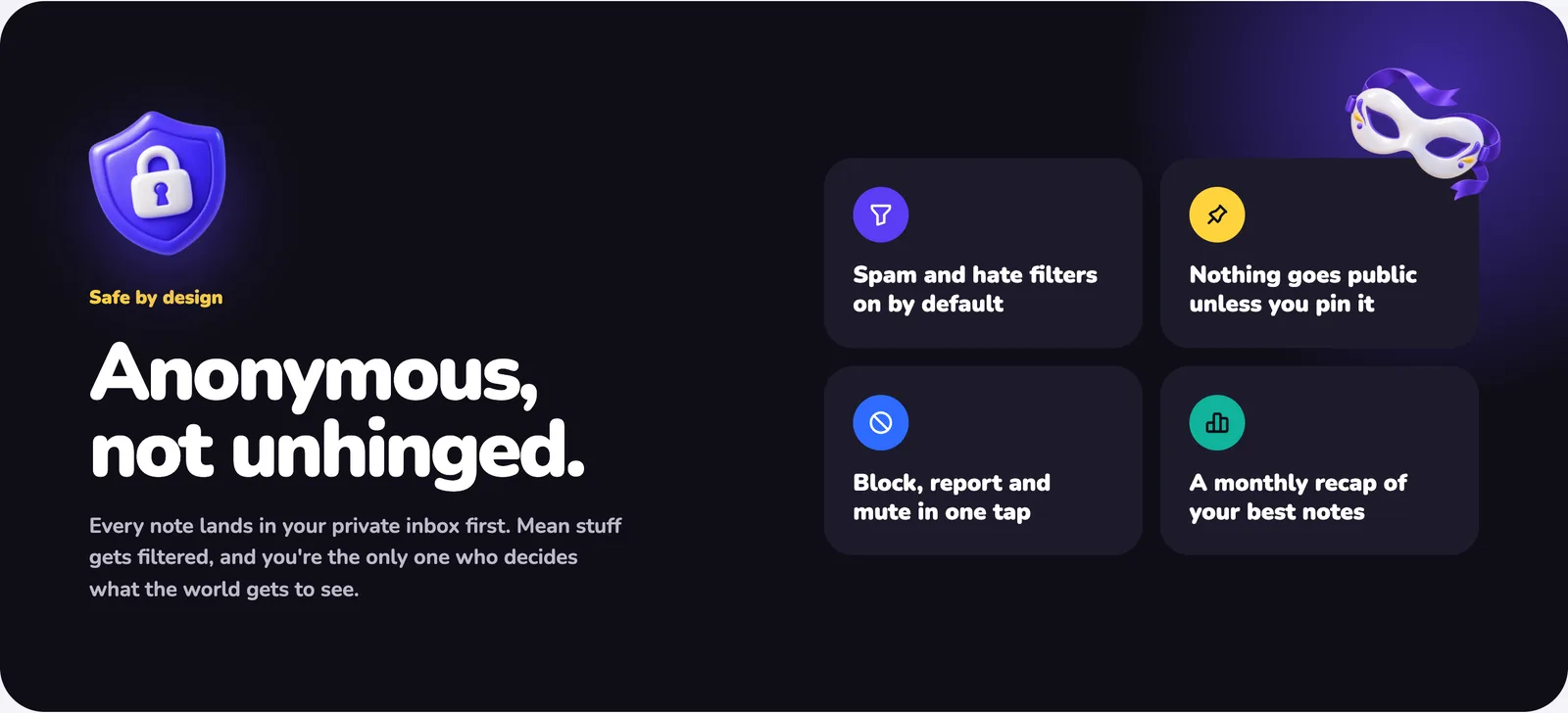
| Filters on by default | Catches mean, hateful or spammy messages before they reach you | Yes: spam, hate and blocked-word filters, with harmful notes held back |
| A private inbox | Nothing goes public by accident | Yes: nothing shows on your page unless you pin it |
| Block and report on every message | So one bad sender can be stopped | Yes, with reports reviewed by a moderation team |
| Control over who can message you | Lock things down if it gets out of hand | Everyone, signed-in people, or people you follow |
| Muted words | Silently drop topics you never want to see | Yes, up to 100 words or phrases |
| A pause button | Take a break without deleting your account | 24 hours, a week, or until you're back |
| No paid sender hints | Anonymity that can't be bought | Never reveals senders, free or paid |
| Labelled app messages | You always know whether a friend really wrote it | Questions from MirrorBox are always labelled |
| A real age gate | Keeps young kids out | 13+, with accounts made by younger children deleted |
| Your data, your call | Download or delete everything | Yes, both in settings |
Red flags#
Think twice about an app that:
- Sells "hints," "reveals" or "see who sent it", especially as a weekly subscription.
- Sends you lots of intense, flirty or provocative messages right after you sign up, from people who don't seem to exist.
- Hides its subscription price or makes cancelling hard.
- Has no visible way to report a message.
- Doesn't ask your age, or lets clearly younger kids sign up.
Tips for teens#
- Turn on the strictest settings first and loosen them later. Limiting messages to signed-in people cuts down on spam a lot.
- Don't answer the mean ones. Block, report and move on. Replying publicly is what bullies want.
- Never pay to find out who sent something. If an app sells it, you're the product.
- Remember screenshots exist. Even private messages can be shared.
- Take a break whenever you need to. A pause button is there for a reason.
Tips for parents#
- Check the age rating in the App Store or Google Play, and the app's own minimum age.
- Set it up together. Go through who-can-message-me, muted words and the report button.
- Look at the subscription screen. Weekly plans and "hint" packs are a warning sign.
- Talk about what to do with a mean message before one arrives: screenshot, block, report, tell someone.
- Ask how it's going, not to check every message, but so they know they can come to you.
The bottom line#
Anonymous message apps aren't automatically dangerous. The design choices are what matter: filters that work, controls you can use, and a business that doesn't depend on fake messages or selling clues about your friends. Use the checklist above, whichever app you choose.
If you want one that was built around that checklist, try MirrorBox for free. It works in any browser, with iPhone and Android apps coming soon. Comparing options? See our best NGL alternatives and MirrorBox vs NGL.